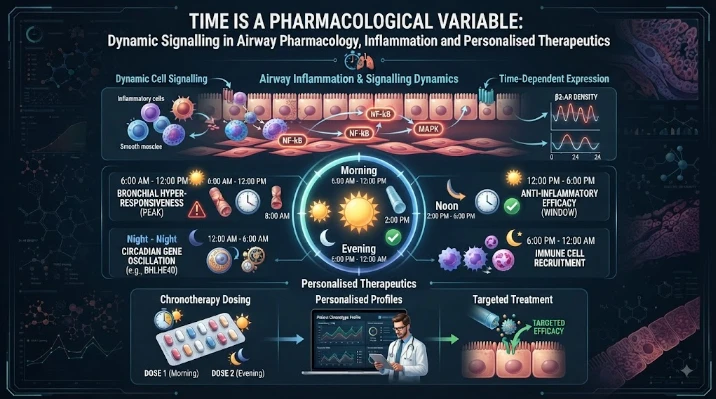
This article argues that time should be treated as a core pharmacological variable in airway disease rather than as a simple dosing convenience. Receptors can activate, desensitize, internalize, recycle, and signal on different timescales, while inflammation and chronic treatment can further modify responsiveness. The beta-2 adrenergic receptor is used to show how bronchodilation, beta-arrestin recruitment, receptor internalization, oxidative stress, and inflammatory signaling can produce different effects depending on ligand, concentration, exposure duration, and cell type. The article extends this reasoning to muscarinic, prostanoid, leukotriene, cytokine, and corticosteroid pathways. Dynamic pharmacodynamic models are proposed to describe onset, peak response, decay, rebound, and tolerance rather than relying on a static concentration–response curve. Circadian biology, exacerbations, cellular heterogeneity, combination-therapy sequence, signaling memory, and patient-specific response trajectories are integrated into the framework. Longitudinal inhaler data, spirometry, symptoms, wearables, ex vivo tissues, and repeated clinical measurements can reveal temporal phenotypes useful for personalized respiratory treatment and dosing.
Airway pharmacology is commonly expressed in terms of targets, doses, and typical responses, but it evolves as time goes on. The activation, internalization, desensitization, recycling and signaling process of receptors takes place on different timescales. Chronic treatment alters receptor state and cellular responsiveness, and inflammatory mediators alter those relationships. Thus, in respiratory therapy, time is not just a time management issue, but also a pharmacological variable which affects the effect of the same drug at different times.
One common example is beta-2 adrenergic receptors. Binding of agonist to this receptor results in the activation of G-protein signaling, an increase in cyclic AMP and smooth muscle relaxation in the airways. The receptors continue to be stimulated and receptor phosphorylation, recruitment of beta-arrestin, receptor internalization, and decreased responsiveness also occur. The kinetics of rapid bronchodilation and later desensitization are dependent on the properties of the ligand, its concentration, the length of exposure and cellular context.
There are differences in the signaling dynamics of different beta-2 agonists. Ligands vary in their efficacy, duration of action, lipophilicity, receptor conformation and receptor pathway selectivity. Experimental research has revealed agonists that promote G-protein signalling but do not cause the high incidence of beta-arrestin engagement, leading to a focus on bronchodilation without tachyphylaxis. These results demonstrate that the identity of receptors is not enough to determine the pharmacology, or the direction of the signal.
That gets turned upside down when there's inflammation. Diseased airways may be less responsive to beta-2 receptors due to decreased responsiveness of these receptors by cytokines, oxidative stress, kinase activity alterations, and receptor regulation alterations. It has also been concluded that the signaling behavior is different in airway epithelium compared to simplified engineered cell systems. A drug that is characterized in one type of cell cannot be extrapolated to the temporal pathway of other types of cells such as airway SM, airway epithelium and immune cells.
Reactive oxygen species comes into play. The inflamed airways have oxidative environments which may alter receptor proteins and associated signaling machinery. Experimental studies have correlated the beta-2 receptor agonism and hydrogen peroxide with receptor oxidation and altered responsiveness. Thus, the chemistry of the disease as well as the effects of the drug determines the pharmacological state of the receptor.
Time dependent signaling does not only apply to bronchodilators. Airway targets include receptors for muscarine, prostanoids, leukotrienes, cytokines and other receptors that exhibit adaptation, feedback, and cross-talk. Corticosteroids have effects on a slower time scale than receptor-mediated bronchodilation. Combination therapy can be effective, in part, because the components have different action mechanisms and action time windows.
This provides a basis for the use of dynamic pharmacodynamic models. A static concentration-response curve provides a description of response at a single time point, but repeated measurements provide onset, peak, decay and rebound and tolerance. Drug concentration can be related to receptor occupancy, signaling, functional contraction, and feedback via mathematical models. This kind of models can assist to differentiate a weak drug from a fast drug measured too late, and from a durable drug measured too early.
When temporal phenotypes are assessed, the possibility of personalised therapeutics is more realistic. For some patients the relief is immediate but is short lived, for others, the response is long lasting or the tolerance to repeated doses. Longitudinal patterns are formed by inhaler use records, spirometry, oscillometry, timing of symptoms and wearable measurements. These patterns may help to establish inadequate control as being due to low exposure, rapid clearance, changed receptor dynamics or continued inflammation.
There is yet another time frame: circadian biology. Asthma symptoms and airway calibre are partly diurnal, and daily rhythm of endogenous hormones and autonomic tone, and inflammatory activity are also observed. An instant application can then affect a different physiological state of the person than an application made hours later. Chronopharmacology questions if there is a relationship between timing and predictable changes in airway vulnerability.
When disease exacerbations happen, there are quicker changes. Acute inflammation can be precipitated by a viral infection, allergen exposure, pollution or a interruption in medications. There is a change in receptor responsiveness, mucous production, epithelial signaling and immune-cell activity during that transition. An optimized treatment plan for stable disease may therefore not be the same when it comes to treating exacerbations.
Dynamic signaling is even more complex, because of cellular heterogeneity. Asthma airway single-cell analysis has identified specific airway epithelial, immune, and stromal subpopulations and identified changes in communication networks between these subpopulations. One cell type can initiate a signal that impacts another cell type later on. Therapeutic response is not the response of a single receptor, but rather the response that comes from a network of timed interactions.
As a result, the meanings of drug combinations must be interpreted over time. A bronchodilator may affect the size of the airways in minutes, which can have an impact on the deposition of an inhaled anti-inflammatory drug that is used later. The effects of corticosteroids take longer to develop, but may return the beta-2 receptor responsiveness by altering inflammatory signaling. The actual sequence and the interval between the treatments is therefore of mechanistic importance, even if the total per day dose is the same.
Dosing also results in memory in signaling systems. Drug concentrations can decrease after receptor/kinase/transcription factor/chromatin states can be changed. This cellular memory impacts on the response to the next dosage. Such measurements, therefore, exclude plasma or lung biological state variables that have an impact on subsequent pharmacodynamics.
Customised models must be functional. The idea of continuous molecular profiling is not practical for routine respiratory care; however, a smaller subset of dynamic biomarkers might be able to capture useful variations. Clinically accessible signals include response duration after rescue therapy, nocturnal worsening, repeated-dose decline, exhaled inflammatory markers, and/or inhaler pattern on the digital device. The most significant markers are those that influence a treatment choice and contributes to control.
Time can be used more intentionally in clinical trials, too. Changes in onset or persistence which are significant may not be picked up at one visit. The patterns of responses are identified through dense early sampling, repeated home measures and symptom data across the years. Subgroups can then be defined to have different temporal pharmacology and estimated from the population models, instead of from a single average line.
Onset and offset kinetics is a topic to be investigated separately as a similar peak response may be masking different therapeutic experiences. One clinical usage is for a fast acting bronchodilator that has a short duration of action and another is for a slow onset but sustained action bronchodilator. These patterns are caused by receptor residence time, membrane partitioning, tissue retention and formulation. Thus, for dynamic models, both the pharmacokinetics and receptor-level kinetics are required.
The additional time dependency after inhalation is due to mucus and airway geometry. Deposition takes only seconds, dissolution takes minutes or hours, mucociliary clearance takes place continuously and inflammatory remodeling takes place over weeks or months in the same pathways. Several clocks running concurrently are therefore a result of a local drug concentration. Treatments should be considered with regard to these concurrent biological and physical phenomena.
Ex vivo human airway tissues serve as a valuable link in dynamic pharmacology. Multi-cellular architecture is maintained in precision cut lung slices and isolated airway preparations, enabling repeated measurements of contraction/relaxation, which is unachievable with single cell systems. Before and after inflammatory conditioning, responses can be compared to determine the temporal drug effects in disease state. These types of experiments are useful in prioritizing mechanisms over complex clinical experiments.
Average change from baseline is not enough for data analysis. Different therapeutic properties are described by area under the effect curve, time to peak response, duration of a clinically meaningful threshold and rate of tolerance development. Patients can be categorized into sub-groups, that were not apparent in one endpoint, by clustering by response trajectories. These dynamic phenotypes are more suited to the pivotal issue of what happens to signaling following each dose.
The real purpose of the practical section is not to make the use of respiratory therapy rely on having to be constantly supervised. Dynamic measurements, however, can be useful to determine stable rules, such as which phenotype has a quick decline in response, or which dosing interval is optimal for sustained control. If validated, those rules can be used to help in simpler clinical decisions. Mechanism becomes useful when it is translated into useful treatment patterns in terms of time.
Airway biology is dynamic and thus, is a pharmacological variable in terms of time. There are also signaling pathways (ligands), changing the state of receptors (modification of inflammation), delays in cellular networks, and changes in responsiveness due to repeated treatment (future responsiveness). Personalised respiratory therapy, thus, benefits not only when does it target a given target but also under a specific disease state and for a certain period of time. Dynamic signaling converts the timing from a convenience to a mechanism of airway pharmacology.
CITE THIS ARTICLE
Kabir, M. H. (2026). Time Is a Pharmacological Variable: Dynamic Signalling in Airway Pharmacology, Inflammation and Personalised Therapeutics. https://researchbykabir.com/article/c861ee9f-6f3b-51d8-87d1-a3c757273d8e
M. H. Kabir, “Time Is a Pharmacological Variable: Dynamic Signalling in Airway Pharmacology, Inflammation and Personalised Therapeutics,” 2026. [Online]. Available: https://researchbykabir.com/article/c861ee9f-6f3b-51d8-87d1-a3c757273d8e
Kabir, M. H. (2026) ‘Time Is a Pharmacological Variable: Dynamic Signalling in Airway Pharmacology, Inflammation and Personalised Therapeutics’. Available at: https://researchbykabir.com/article/c861ee9f-6f3b-51d8-87d1-a3c757273d8e
Kabir, Md. Humayan. “Time Is a Pharmacological Variable: Dynamic Signalling in Airway Pharmacology, Inflammation and Personalised Therapeutics.” 2026, https://researchbykabir.com/article/c861ee9f-6f3b-51d8-87d1-a3c757273d8e.
Md. Humayan Kabir. “Time Is a Pharmacological Variable: Dynamic Signalling in Airway Pharmacology, Inflammation and Personalised Therapeutics.” (2026). https://researchbykabir.com/article/c861ee9f-6f3b-51d8-87d1-a3c757273d8e.
Kabir MH. Time Is a Pharmacological Variable: Dynamic Signalling in Airway Pharmacology, Inflammation and Personalised Therapeutics. 2026. https://researchbykabir.com/article/c861ee9f-6f3b-51d8-87d1-a3c757273d8e
@misc{article_c861ee9f6f3b51d887d1a3c757273d8e,
  title = {Time Is a Pharmacological Variable: Dynamic Signalling in Airway Pharmacology, Inflammation and Personalised Therapeutics},
  author = {Md. Humayan Kabir},
  year = {2026},
  url = {https://researchbykabir.com/article/c861ee9f-6f3b-51d8-87d1-a3c757273d8e},
}
TY  - GEN
AU  - Md. Humayan Kabir
TI  - Time Is a Pharmacological Variable: Dynamic Signalling in Airway Pharmacology, Inflammation and Personalised Therapeutics
PY  - 2026-04-19
UR  - https://researchbykabir.com/article/c861ee9f-6f3b-51d8-87d1-a3c757273d8e
ER  -
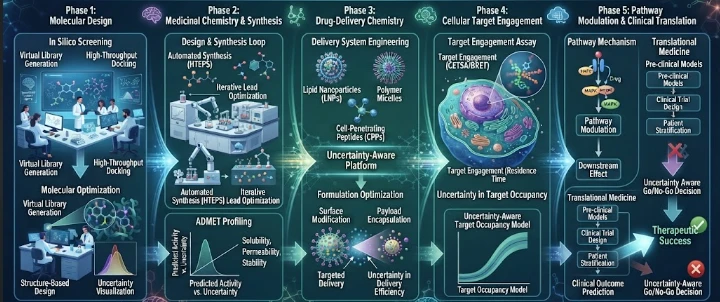
This article describes an uncertainty-aware platform for moving from predicted molecular binding to validated cellular target engagement in medicinal chemistry and drug-delivery research. Docking and machine-learning predictions can rapidly prioritize compounds, but they do not establish that a molecule reaches, occupies, and functionally modulates a target inside relevant cells. The article therefore separates predicted affinity from free intracellular concentration, subcellular localization, t
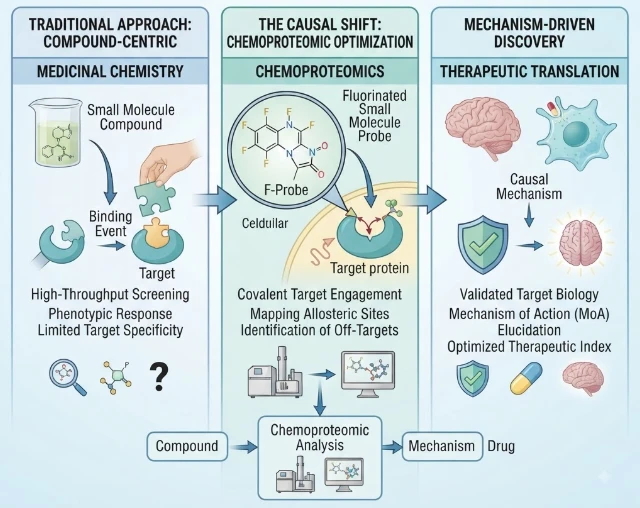
This article explores fluorinated medicinal chemistry through causal chemoproteomics, emphasizing that fluorine substitution can alter far more than potency. A single positional change can modify conformation, pKa, lipophilicity, metabolic stability, target interactions, intracellular exposure, and off-target biology. The article therefore tests whether fluorinated analogues change cellular phenotype through intended target engagement rather than hidden polypharmacology. Matched molecular pairs
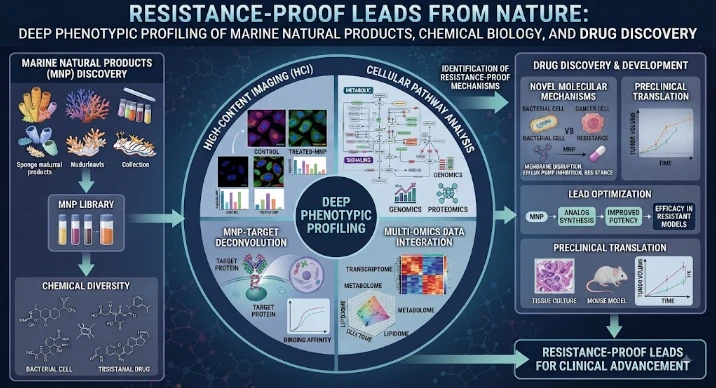
This article presents resistance-aware marine natural-product discovery as a mechanistic process rather than a search for isolated high-potency hits. It explains how activity from marine extracts or fractions can disappear during purification or fail under resistance pressure, making deep phenotypic profiling essential. Morphology, viability kinetics, organelle function, transcriptional state, metabolism, and recovery after washout are combined to connect phenotype with mechanism. The article em