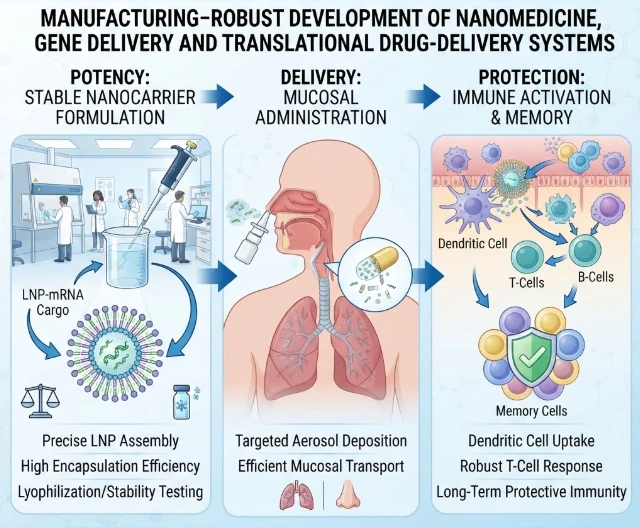
This article argues that manufacturing is part of nanomedicine pharmacology because process history can change the physical product that reaches tissues. Laboratory potency may depend on tightly controlled small-scale preparation and then shift during scale-up, filtration, freezing, thawing, shipment, dilution, or administration. The article links critical material attributes and process parameters to transfection, biodistribution, target expression, and therapeutic effect. Mixing rate, flow ratio, concentration, lipid or polymer composition, cargo quality, filtration, fill volume, storage, and administration handling are treated as interacting variables. Key failure routes include aggregation, cargo leakage, hydrolysis, oxidation, altered particle morphology, batch drift, reduced endosomal escape, and potency loss. Delivered particle number, intact cargo fraction, cellular uptake, endosomal release, expression level, tissue distribution, and clearance define exposure. Process models, multivariate control, digital twins, stability forecasting, design spaces, and risk-based specifications support optimization. Engineering batches, scale transitions, site transfers, shipping simulations, device compatibility, and potency bridging are proposed for prospective validation. The central message is that protection requires reproducible product performance across the entire manufacturing and use pathway.
From Potency to Protection presents a central issue in the preparation of robust nanomedicine and gene delivery: the potency of nanomaterials prepared in the lab is frequently dependent on carefully controlled small-scale preparation that is not reproducible on larger scales or in storage or shipping and may not be achieved in the clinic. For a good development strategy the focus is on a quantifiable mechanism, not just a single impressive assay result. The change creates a new translation, examining chemistry, biology, exposure, resistance, safety, and production as one argument.
The scientific underpinning is based on a process where the manufacture-robust development directly correlates critical material characteristics and process parameters with transfection, biodistribution, target expression and therapeutic efficacy. Everything is a piece of the puzzle, and none of the components on their own is enough to support the entire mechanistic statement. The connection of evidence mitigates the risk of mistaking potency, binding, formulation performance and/or model fit for understanding of a therapeutic relationship.
The process history is particularly critical for the manufacturing of nanoparticles because the mixing process affects the nucleation, size, cargo encapsulation and surface composition of the particles within seconds. A small volume formulation pipetted into a controlled impingement or microfluidic mixing formulation will change when scaled-up. There's still more changes, such as sterile filtration, freezing, thawing and dilution, and passage through administration hardware. Potency testing should, therefore, be carried out throughout the manufacturing and use of the product.
The combination of treatment of the design variables such as mixing rate, flow ratio, concentration, lipid or polymer composition, quality of the cargo, filtering; fill volume, storage and administration handling can change the performance simultaneously, necessitating joint treatment. Adopting optimization of a single parameter can impose an unseen penalty on other parameters, such as potency vs stability, potency vs selectivity, potency vs delivery or potency vs manufacturability. Considerable more realistic ranking of candidates can be achieved using multiparameter decision rules than a single numerical endpoint.
Having early measurements of failure routes is also a prerequisite for mechanistic confidence. Aggregation, cargo leakage, hydrolysis, oxidation, changed particle shape, batch drift, decreased endosomal escape and potency loss are important escape mechanisms. Stress testing intentionally makes these routes into design information, which can be used to inform the next chemistry, formulation, dosing or model cycle.
A link between nominal dose and biological effect is exposure. Delivered particle number, intact cargo fraction, cellular uptake, endosomal release, expression level, tissue distribution and clearance are all relevant quantities. A candidate that is active in a simple assay but not active at the causal site can appear as a great candidate for assay, but be unsuitable for translation.
When interpreting the engagement or functional perturbation, it is recommended to do so at realistic concentrations. Side effects, off-target effects or assay artefacts may occur at high doses and give a false positive effect of the desired mechanism. Concentration-response analysis, linked to exposure and occupancy, aids in determining a range that the proposed causal process is seen to work.
Biological context also influences interpretation in the case of nanoparticles that are used to deliver RNA, DNA, gene-editing molecules, proteins and small molecules. Target dependence and effective exposure can vary because of differences in genotype, cell state, tissue architecture, immune tone, metabolic environment and prior treatment. Therefore, representative model panels are more good evidence than the repeated testing in one convenient system.
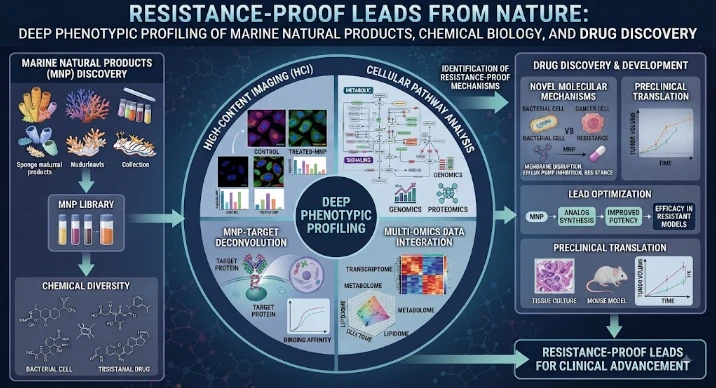
Resistance and adaptation should be measured on the prospective and not the retrospective basis. Further selection, serial passage, genetic manipulation, repeated dosing or environmental stress can identify which mechanisms are able to withstand ongoing selection. A slightly weaker, but more blockbuster escape resistant candidate can have greater translational value than a weak screening leader.
A mechanism is a key element in safety assessment, especially to make it more informative. There are several concerns to consider, such as complement activation, liver burden, off-target expression, impurities toxicity, and repeat dose immunogenicity. A comparison of desired engagement to unwanted biological responses aids in differentiating mechanism related pharmacology from general cellular damage or formulation related toxicity.
The quality of the raw material must not only be determined, but the quality of the mixing equipment must also be determined, as well as the quality of sterile processing, the filtration equipment, the fill-finish, the container, the cold storage, the transport, and finally the reconstitution. Manufacturing cannot be a downstream logistics exercise anymore, because the quality of the raw material is affected by the quality of the mixing equipment, of sterile processing, of the filtration, of the fill-finish, of the container system, of cold storage, of the transport, and last but not least of the reconstitution. Even if the product name is not changed, minor changes in the process can impact the composition, physical state, level of impurities, stability or dose consistency. The critical process attributes are directly connected to the mechanistic performance, adding robustness to development.
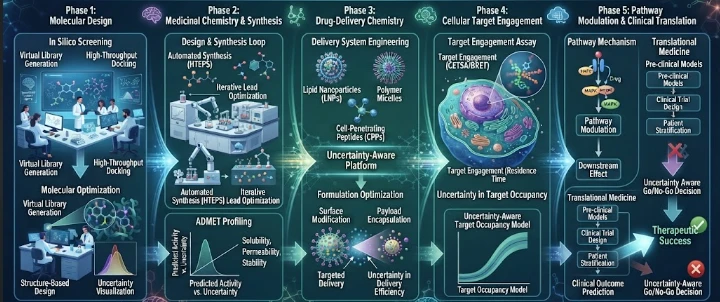
Process models and multivariate control, digital twins, stability forecasting, design spaces, and risk-based specification setting are examples of the tools that add leverage to the computational approach. Prediction is most useful when there are areas of uncertainty and applicability limits that are still visible, particularly in the vicinity of novel chemical structures, unusual biological states, and areas with poor data coverage. Models that allow for uncertainty will lead to better experiment selection than models that simply rank experiments with a high degree of confidence without revealing where their knowledge is low.
The engineering of batches, scale transfer, site transfer, shipping simulation, administration/device compatibility, and potency bridging following a process change are all required for prospective validation. Repeated measurements in the same family of assays would introduce the same 'hidden bias' without providing greater evidence of causation because orthogonal tests are important. If the results are in agreement on independent designs it is a more robust chain from design choice to biological consequence and if they disagree, then there is an assumption to be modified.
Data integration needs to maintain the traceability of the data from raw experiment to a development decision. Chemical structures, process conditions, assay metadata, exposure measurements, omics features, resistance observations, and safety signals should all be versioned and have stable identifiers. This discipline helps to avoid subsequent interpretations getting "off the message" from what the result was.
Decision metrics also must not be used as a laboratory show. The attributes of useful scorecards include reproducibility, exposure-normalized activity, mechanistic confidence, resistance frequency, safety margin, stability, and manufacturing robustness. This will incentivize balanced candidates, and allow for some kind of trade-offs to be clearly seen before costly development commitments are made.
In this context especially negative results have high values. The limit of a hypothesis is defined by failed synthesis, missing engagement with the target, an unstable exposure, absence of rescue, emergence of resistance, lack of batch reproducibility and/or loss of activity in realistic models. Documenting those failures aids future experimental design and allows for investment to be made in viable yet more attractive explanations.
Reproducibility of a laboratory to laboratory and also batch to batch is another key filter. Even though statistical significance appears robust, a mechanism which relies on one operator, one preparation, one cell line, or one modeling choice is fragile, since that may be the only one sufficient to obtain significance. When conditions are matched, independent repeating differentiates repeatable biology from local experiments.
There is also a practical aspect of clinic or deployment that needs to be taken into account when doing translation. Technically complex products may not be viable if their value to the user is limited by route or administration burden, diagnostic requirements, storage needs, monitoring requirements, cost, or treatment timing. When product design is designed to have a biological effect, it needs to be mechanistic excellence to make a difference.
Another added layer is temporal design which involves the response of biological systems, specifically short pulses, long exposure, washout, repeated dosing. Time-resolved measurements can distinguish between early activity that is due to engagement from later activity that is due to adaptation, and can also provide some indications of whether early activity continues after the initiating signal has been extinguished. Sampling schedules must thus be tailored to the expected manufacturing robust nanomedicine and gene delivery kinetics and cannot just be left at an arbitrary end point.
An integrated development record aids in improved communication between medicinal chemistry, formulation science, pharmacology, computation, manufacturing and clinical planning. The record does not have to tell one single story, but can differentiate between known connections, likely assumptions, unknowns, and the next experiment with the most information content. This transparency makes the iterations quicker and lessens the pressure to justify initial statements when conflicting data comes up.
Novelty is kept in check by a benchmarking against credible reference conditions. Whether a new approach will result in better prediction, better mechanism, longer duration or better manufacturability is determined by established compounds (inactive controls), standard formulations, baseline models, or accepted analytical methods. A head-to-head comparison also allows gains to be identified that are lost following exposure, assay sensitivity, batch sensitivity or experimental complexity normalization.
Because of the consideration of variability in the processes, manufacturing becomes a part of pharmacology, from potency to protection. It is not sufficient for a candidate to pass a single assay—it must be coherent throughout the exposure, biological variation, resistance, safety and production assays. The standard establishes a more structured route from the discovery signal to a therapeutic concept that is capable of enduring the rigors of the real world.
CITE THIS ARTICLE
Kabir, M. H. (2025). From Potency to Protection: Manufacturing-Robust Development of Nanomedicine, gene delivery and translational drug-delivery systems. https://researchbykabir.com/article/b604f83e-3c77-5f26-9fbd-2dd79a0faafd
M. H. Kabir, “From Potency to Protection: Manufacturing-Robust Development of Nanomedicine, gene delivery and translational drug-delivery systems,” 2025. [Online]. Available: https://researchbykabir.com/article/b604f83e-3c77-5f26-9fbd-2dd79a0faafd
Kabir, M. H. (2025) ‘From Potency to Protection: Manufacturing-Robust Development of Nanomedicine, gene delivery and translational drug-delivery systems’. Available at: https://researchbykabir.com/article/b604f83e-3c77-5f26-9fbd-2dd79a0faafd
Kabir, Md. Humayan. “From Potency to Protection: Manufacturing-Robust Development of Nanomedicine, gene delivery and translational drug-delivery systems.” 2025, https://researchbykabir.com/article/b604f83e-3c77-5f26-9fbd-2dd79a0faafd.
Md. Humayan Kabir. “From Potency to Protection: Manufacturing-Robust Development of Nanomedicine, gene delivery and translational drug-delivery systems.” (2025). https://researchbykabir.com/article/b604f83e-3c77-5f26-9fbd-2dd79a0faafd.
Kabir MH. From Potency to Protection: Manufacturing-Robust Development of Nanomedicine, gene delivery and translational drug-delivery systems. 2025. https://researchbykabir.com/article/b604f83e-3c77-5f26-9fbd-2dd79a0faafd
@misc{article_b604f83e3c775f269fbd2dd79a0faafd,
  title = {From Potency to Protection: Manufacturing-Robust Development of Nanomedicine, gene delivery and translational drug-delivery systems},
  author = {Md. Humayan Kabir},
  year = {2025},
  url = {https://researchbykabir.com/article/b604f83e-3c77-5f26-9fbd-2dd79a0faafd},
}
TY  - GEN
AU  - Md. Humayan Kabir
TI  - From Potency to Protection: Manufacturing-Robust Development of Nanomedicine, gene delivery and translational drug-delivery systems
PY  - 2025-04-27
UR  - https://researchbykabir.com/article/b604f83e-3c77-5f26-9fbd-2dd79a0faafd
ER  -
This article describes an uncertainty-aware platform for moving from predicted molecular binding to validated cellular target engagement in medicinal chemistry and drug-delivery research. Docking and machine-learning predictions can rapidly prioritize compounds, but they do not establish that a molecule reaches, occupies, and functionally modulates a target inside relevant cells. The article therefore separates predicted affinity from free intracellular concentration, subcellular localization, t
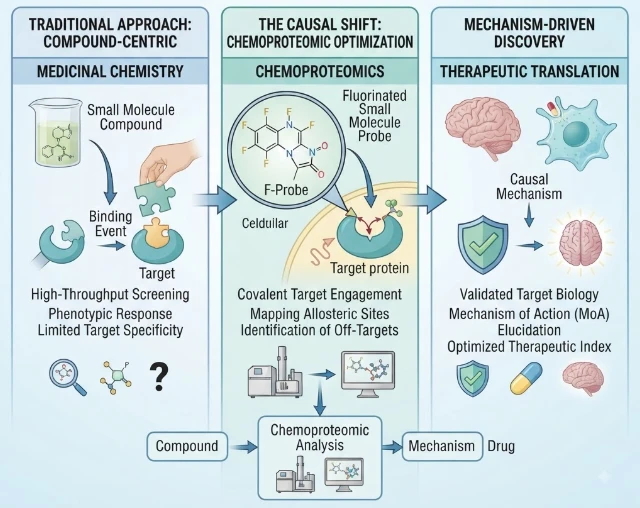
This article explores fluorinated medicinal chemistry through causal chemoproteomics, emphasizing that fluorine substitution can alter far more than potency. A single positional change can modify conformation, pKa, lipophilicity, metabolic stability, target interactions, intracellular exposure, and off-target biology. The article therefore tests whether fluorinated analogues change cellular phenotype through intended target engagement rather than hidden polypharmacology. Matched molecular pairs
This article presents resistance-aware marine natural-product discovery as a mechanistic process rather than a search for isolated high-potency hits. It explains how activity from marine extracts or fractions can disappear during purification or fail under resistance pressure, making deep phenotypic profiling essential. Morphology, viability kinetics, organelle function, transcriptional state, metabolism, and recovery after washout are combined to connect phenotype with mechanism. The article em