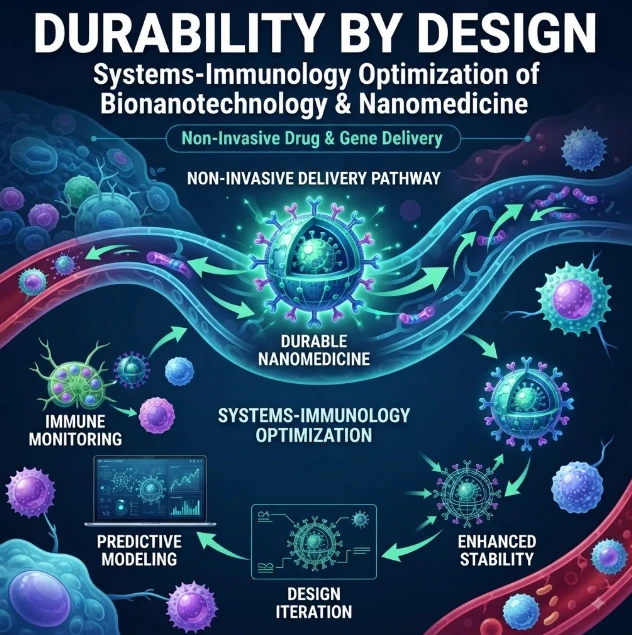
This article focuses on designing nanomedicine for durable immune and therapeutic effects rather than evaluating only the first dose or initial response. It centers on early innate sensing, antigen presentation, lymphocyte programming, tissue-resident responses, and immune memory, showing that prolonged circulation or slow release alone does not guarantee lasting benefit. Repeated exposure can alter antibody formation, cellular trafficking, tissue immunity, clearance, and subsequent response patterns. Longitudinal cytokine measurements, single-cell profiling, immune-repertoire analysis, tissue-level readouts, repeated-dose studies, and systems-level modeling are proposed for mapping these trajectories. The article highlights baseline immunity, prior vector exposure, age, inflammatory phenotype, and concomitant immunomodulatory therapy as important context variables. Risks include immune exhaustion, tolerance, anti-carrier antibodies, chronic inflammation, and declining efficacy after repeated administration. Critical quality attributes must remain stable across manufacturing lots because small formulation changes can alter immune programming. The central message is that durability should be an upfront, measurable design objective supported by longitudinal mechanistic evidence, reproducible production, and prospective validation.
By shifting attention from potency, delivery or association questions to that of the design of durable systems, nanomedicine-immune systems design is going beyond the traditional focus on just "what does this do" and "how can it be delivered" questions to focus on the "why is it happening" and "when will it continue to happen" questions that are essential to the modern therapeutic development process. A network of mechanisms underlies this change, and is centered on early innate sensing, antigen presentation, priming of lymphocytes, tissue-resident responses, and immune memory. The importance of that network is that there's a difference between having a strong delivery and a strong immune activation and a strong long-term therapeutic effect. The more robust development strategy thus considers mechanism, context and uncertainty all as intertwined design variables in one process rather than being distinct processes carried out at various stages.
For nanomedicine to be durable, it has to circulate longer and release more slowly than it would otherwise. Subsequent exposures may alter the pre-existing sensing, antibody production, cellular trafficking, tissue-resident immunity and clearance leading to a quite different response than the first exposure. These trajectories can be mapped using systems-immunology tools, such as longitudinal cytokine measurements, single-cell measurements, immune-repertoire measurements, or tissue-level measurements. The resulting image is of durability as a biological program that is controllable and measurable, not an afterthought based on the length of time efficacy is detectable.
The result of this is a new paradigm in discovery that is centered on longitudinal immune profiling, single-cell transcriptomics, repertoire analysis, longitudinal cytokine trajectories, repeated dose studies and systems-level response modeling. None of these assays is game changers on its own because each assay only measures a subset of the larger biological/clinical process. The more independent measurements that lead to the same causal story in dose, time, model system, and relevant biological context, the more people become confident. Inconsistent results are useful as they may represent masking due to hidden mechanisms or assay artifacts, or differences in population or exposure that could be studied before further costly development is undertaken.
When trying to make decisions about which formulation will result in the maintenance of a beneficial immune state rather than a short-lived response, the central question is which features in the formulation will do the job? A definitive answer to this question requires explicit and clear comparison to a "best estimate" of possible alternatives such as off target effects, parallel pathways, differential exposure, or measurement bias. Perturbation experiments are particularly informative as they allow the removal, blocking or restoration of a proposed component to determine if the observed effect is dependent upon this component. Therefore, the confidence in the mechanism is from challenge tests and not from repeated confirmation within one favorable assay.
Almost all the results are also different in context; that is, the meaning of the results is different in systems-immunology design in nanomedicine. Baseline immunity, vector exposure, inflammatory phenotype, age and concomitant immunomodulatory treatment are all relevant variations. Efficacy or toxicity of an intervention can be lower or higher, or the biological response different, under a different set of conditions. Stratification is more useful when based on variables related to mechanism or exposure, rather than just descriptions categories, which provide little insight into the reasons for changes in treatment performance.
Risk assessment should be put on a par for importance due to immune exhaustion, immune tolerance, anti-carrier antibodies, chronic inflammation, and lack of efficacy after repeated exposure. Early safety work is best integrated with the same mechanistic approach as that used for efficacy, thereby enabling unwanted effects to be traced back to target biology, carrier behaviour, exposures, metabolites and/or analytical bias. This way, the risk of safety being a late checklist that is not linked to discovery logic is minimised. It also provides more transparent trade-offs on how to achieve greater effectiveness from increased exposure, a wider modulation of pathways, or the more extended persistence in a sensitive tissue.
The additional layer is added by translational development: longer treatment periods, more reliable repeated dose and prediction of late immune effects. Preclinical success is more informative if experiments are conducted under clinically relevant conditions with relevant concentration ranges, biological barriers, treatment history and sources of biological heterogeneities. It's less useful to go from an easy model to a complicated model than to go through a series of models that address specific questions of uncertainty. Therefore for each step, there must be a clear decision that will be made: to continue, to redesign, to narrow the target population, to change dosing, or to gather another sort of mechanistic information.
Manufacturing and analytical control are both critical as there must be no lot to lot variation in critical quality attributes as small changes in the formulation can alter how the immune programming will proceed. The above disadvantages make the biological explanation less useful if the material being tested has been altered between batches or the assay inputs are only poorly defined. Therefore critical attributes must have specific ranges, be sensitive to measure and link process conditions to biological performance. This discipline is particularly relevant for complex molecules, nanomaterials, biomaterials, and studies involving large amounts of data, which may result in very small changes to exposure, signaling, and/or response to treatment.
For durable systems-immunology, a better separation of prediction and confirmation is another advantage of data analysis in nanomedicine design. Although there are various ways of ranking hypotheses, mapping high-dimensional measurements and revealing uncertainty—such as using computational models, machine learning, causal estimators, or mechanistic simulations—model output does not equal biological truth. Useful models set up assumptions, measure calibration, mark down over-framed areas and suggest experiments that will provide information to alter a decision. It is important to also validate results in the future, as patterns that are best fit in the past might not be best fit in the future.
In another important change, the focus on time, as many of the processes that are central to durable systems such as the design of immunological systems in nanomedicine occur after the initial exposure. Even if there is a single endpoint that is favorable, the early response, adaptation, clearance, immune programming, tissue remodeling, adherence, and/or resistance may take different trajectories. Longitudinal measurement determines if the intervention has an effect that is stable, upheaval, or liability. Another advantage of time-resolved data is that it can enhance the causal interpretation of the proposed mechanism, since it will appear prior to the downstream phenotype, not afterward.
The more efficient the experimental design, the more efficient the study will be when associated with a concrete uncertainty budget. While novelty is a good indicator of questions, questions about early innate sensing, antigen presentation, programming of lymphocytes, tissue-resident responses, and immune memory can be grouped by their ability to alter which formulation features result in an enduring beneficial immune state – not their novelty alone. Replication across complementary models is then used to determine if the conclusion is based on one assay or one laboratory condition or one population. Such discipline would preclude wasted optimization and informative failures as each failure reduces the design space of what may be happening and the next design iteration would be more successful.
There is also a need for traceability from claims to measurements to provide regulatory and clinical credibility. A development package is stronger when, from initial experiments to the eventual translation, the raw observations, processing decisions, model assumptions, protocol deviations, and the attributes of the materials are tied together in a durable system-immunology design in nanomedicine. That traceability can be helpful to differentiate real biological variation from technical noise, and aid in subsequent safety or efficacy testing. It also provides a more solid foundation for revising the conclusions in the event of new data changing the prior assumptions.
There is also greater precision needed when communicating around this field. The terms targeted, selective, durable, safe, predictive, or personalized alone don't have much meaning without including a measurement, a comparator, a population, and an uncertainty range. Having negative reports is more useful and avoids having false-positive findings reported as mechanisms. Such precision is a common language to determine if a claim is based on direct measurement or calibrated inference or on an untested assumption for researchers, developers, clinicians and regulators.
Nanomedicine's most promising trajectory of durable systems design is therefore a more closed loop between chemistry/formulation, mechanistic measurement, quantitative modeling, safety, manufacturing control and clinically relevant context. If you fail to see your assumptions as false, it will be harder to build on them, and if you don't subject your mechanisms to hard exercises, they will not become good. That logic adds to the durability becomes a measurable design goal right from the start of the development process. The most useful innovation in the field is a development system that is learning from all experiments and retains causal understanding, reproducibility, and relevance at the heart of every development decision.
CITE THIS ARTICLE
Kabir, M. H. (2025). Durability by Design: Systems-Immunology Optimization of Bionanotechnology, Non-Invasive Drug and Gene Delivery, Nanomedicine. https://researchbykabir.com/article/cf886120-93ce-5c22-90a3-f5645e5f4372
M. H. Kabir, “Durability by Design: Systems-Immunology Optimization of Bionanotechnology, Non-Invasive Drug and Gene Delivery, Nanomedicine,” 2025. [Online]. Available: https://researchbykabir.com/article/cf886120-93ce-5c22-90a3-f5645e5f4372
Kabir, M. H. (2025) ‘Durability by Design: Systems-Immunology Optimization of Bionanotechnology, Non-Invasive Drug and Gene Delivery, Nanomedicine’. Available at: https://researchbykabir.com/article/cf886120-93ce-5c22-90a3-f5645e5f4372
Kabir, Md. Humayan. “Durability by Design: Systems-Immunology Optimization of Bionanotechnology, Non-Invasive Drug and Gene Delivery, Nanomedicine.” 2025, https://researchbykabir.com/article/cf886120-93ce-5c22-90a3-f5645e5f4372.
Md. Humayan Kabir. “Durability by Design: Systems-Immunology Optimization of Bionanotechnology, Non-Invasive Drug and Gene Delivery, Nanomedicine.” (2025). https://researchbykabir.com/article/cf886120-93ce-5c22-90a3-f5645e5f4372.
Kabir MH. Durability by Design: Systems-Immunology Optimization of Bionanotechnology, Non-Invasive Drug and Gene Delivery, Nanomedicine. 2025. https://researchbykabir.com/article/cf886120-93ce-5c22-90a3-f5645e5f4372
@misc{article_cf88612093ce5c2290a3f5645e5f4372,
  title = {Durability by Design: Systems-Immunology Optimization of Bionanotechnology, Non-Invasive Drug and Gene Delivery, Nanomedicine},
  author = {Md. Humayan Kabir},
  year = {2025},
  url = {https://researchbykabir.com/article/cf886120-93ce-5c22-90a3-f5645e5f4372},
}
TY  - GEN
AU  - Md. Humayan Kabir
TI  - Durability by Design: Systems-Immunology Optimization of Bionanotechnology, Non-Invasive Drug and Gene Delivery, Nanomedicine
PY  - 2025-09-28
UR  - https://researchbykabir.com/article/cf886120-93ce-5c22-90a3-f5645e5f4372
ER  -
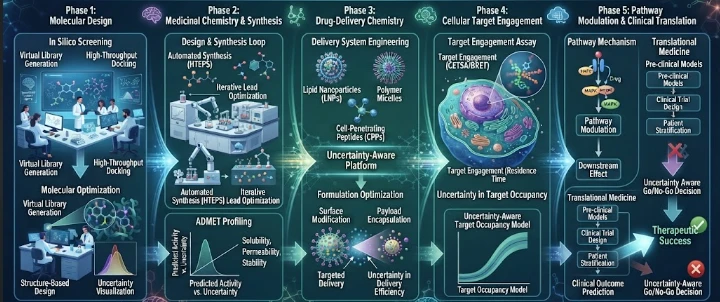
This article describes an uncertainty-aware platform for moving from predicted molecular binding to validated cellular target engagement in medicinal chemistry and drug-delivery research. Docking and machine-learning predictions can rapidly prioritize compounds, but they do not establish that a molecule reaches, occupies, and functionally modulates a target inside relevant cells. The article therefore separates predicted affinity from free intracellular concentration, subcellular localization, t
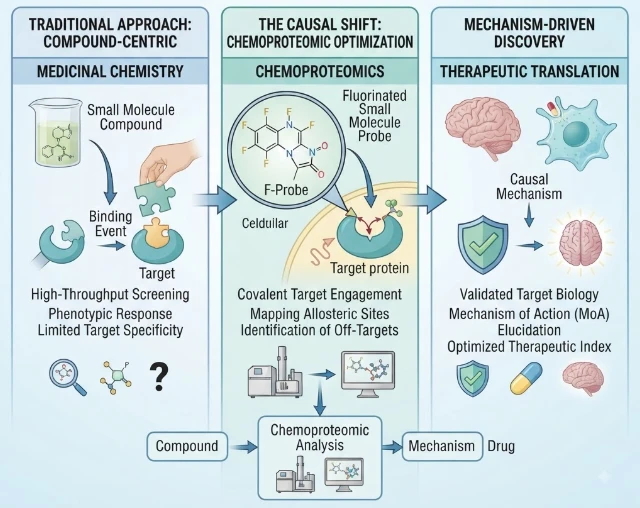
This article explores fluorinated medicinal chemistry through causal chemoproteomics, emphasizing that fluorine substitution can alter far more than potency. A single positional change can modify conformation, pKa, lipophilicity, metabolic stability, target interactions, intracellular exposure, and off-target biology. The article therefore tests whether fluorinated analogues change cellular phenotype through intended target engagement rather than hidden polypharmacology. Matched molecular pairs
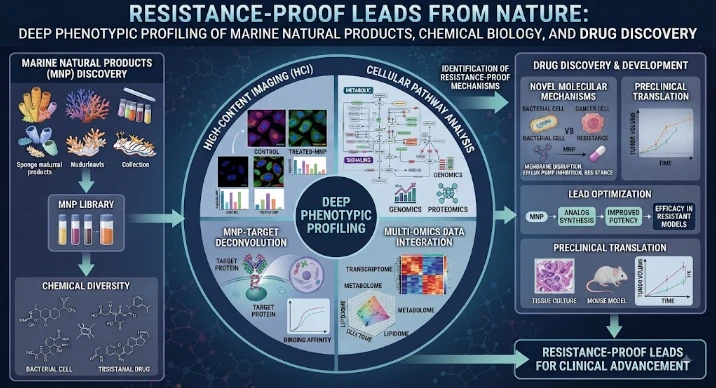
This article presents resistance-aware marine natural-product discovery as a mechanistic process rather than a search for isolated high-potency hits. It explains how activity from marine extracts or fractions can disappear during purification or fail under resistance pressure, making deep phenotypic profiling essential. Morphology, viability kinetics, organelle function, transcriptional state, metabolism, and recovery after washout are combined to connect phenotype with mechanism. The article em