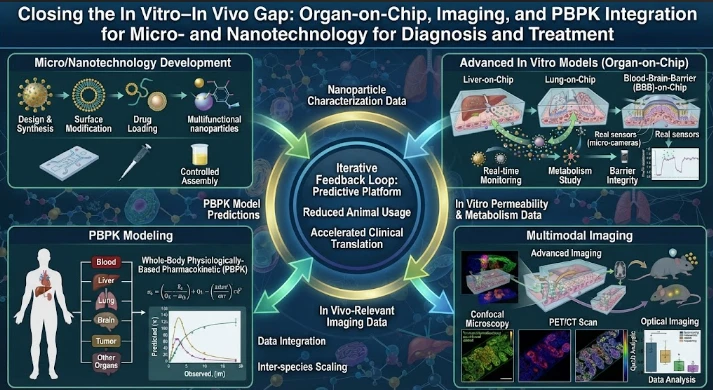
This article addresses the persistent gap between promising in vitro results and real in vivo performance in micro- and nanotechnology for diagnosis and treatment. It explains that conventional cell culture often misses critical physiological factors such as flow, tissue interfaces, mechanical forces, immune clearance, and dynamic biological barriers. Organ-on-chip systems are therefore proposed as more structured experimental environments for studying transport, permeability, uptake, and barrier interactions under realistic conditions. Imaging adds spatial and temporal information about accumulation, localization, and clearance, while PBPK modeling connects local experimental measurements to whole-body exposure. The article emphasizes using chip outputs such as permeability coefficients, uptake rates, metabolic clearance, and intracellular retention as model parameters rather than isolated endpoints. It also discusses nanoparticle-specific complications including protein corona formation, payload release, multiple chemical species, disease-specific barriers, donor variability, and multi-organ interactions. By combining organ-on-chip experiments, imaging, PBPK modeling, sensitivity analysis, and qualification rules, the proposed framework creates an iterative bridge from engineered systems to human physiology.
The miniaturization and nanotechnology revolution have resulted in a wide variety of diagnostic particles, drug delivery vehicles, imaging probes, implantable devices, and responsive therapeutic vehicles. However, translation is still not easy because the results of performance in a simplified laboratory model do not always foretell the behavior in a living organism. Nanoscale systems are altered after administration due to protein adsorption, flow, tissue barriers, immune clearance, organ distribution, metabolism, and patient variability. Models bridging the in vitro–in vivo gap to enable physical behaviour–human physiology connection are therefore demanded.
Conventional cell culture offers control and speed, but is difficult to reproduce the forces and interfaces that play a key role in many biomedical technologies. Whereas endothelial cells react differently to flow, epithelial barriers to mechanical stretch, and immune cells to particles in moving fluids as opposed to stationary media. To fill in some of this mismatch, organ-on-chip systems mimic tissue interfaces, gradients, perfusion, and specific mechanical cues. The outcome is not a small full-size organ, but rather a more "physiologically structured" experimental situation.
These benefits are especially applicable in the context of nanomedicine. Interactions with other barriers such as the endothelium, extracellular matrix, mucus, macrophages, etc. are affected by particle size, charge, shape, surface chemistry, and stiffness. There are differences between flow and static incubation in terms of margination and adhesion, and shear forces alter cellular uptake and barrier permeability. Standard uptake assays are thus inadequate and experiments with organs in a chip can therefore show transport behavior that is not captured by the standard assays.
Imaging provides Spatial and Temporal information. There are various methods available to elucidate distribution, such as fluorescence microscopy, confocal, live-cell techniques, radiolabeling, magnetic resonance, computed tomography and elemental imaging. Imaging can monitor the accumulation, clearance and localization of barriers and cells within chips over time. In animals and clinical studies, imaging can be used to provide organ-level biodistribution which can connect experimental systems to whole body behavior.
The other hurdle is that of scale. The material is administered throughout an interconnected body, whereas a chip may replicate a lung barrier, liver sinusoid, intestinal epithelium or a tumor microenvironment. Physiologically based pharmacokinetic modeling is a mathematical model that allows for the interconnection of compartments via blood flow, tissue volume, permeability, binding, metabolism and clearance. Thus, predictions of systemic exposure can be made from local mechanistic measurements using a PBPK model.
The first is to consider the outputs of the chips as parameters, not endpoints, in the model. Compartmental uptake rates, permeability coefficients, metabolic clearance, intracellular retention and transport kinetics under controlled conditions can be used as inputs into PBPK compartments. The model then predicts the interactions between such processes in tissue. The difference between the predicted and actual concentrations of animals/human can point to the biological assumption in question.
This iterative construction is significant since the behavior of nanomaterials is controversial with regard to the classic pharmacokinetics assumptions. A nanoparticle can undergo changes when it forms protein corona, and release a payload at a different rate in different tissues, or break down into components, or be taken up by phagocytic cells. Only total drug concentration can obscure any differences in intact carrier vs released compound. Therefore, with integrated models, it is advantageous to track multiple species where analytical methods allow.
Disease-specific barriers can also be simulated in organ-on-chip platforms. There is an abnormal permeability of tumor vessels, inflammation of tissues that affects adhesion molecules, alteration of the diffusion in fibrotic matrices and alteration of mucus and epithelial function in diseased airways. When selected pathological features are reproduced, it is useful to check if the nanocarrier is successful due to a strong mechanism or due to a model being missing of a relevant barrier. This is a key concept in patient related translation.
There are similar challenges in diagnostics using microtechnology. Proteins, cells, variable viscosity and interfering molecules present in real samples can be problematic for biosensors and microfluidic assays in a clean buffer. Evaluation of fouling, non-specific binding, transport limitations and signal stability can be performed using tissue chips and realistic biological matrices. Combination of those measurements with clinical sample distributions yields a better estimate of true diagnostic performance.
Imaging is the common language in which observations are made across scales. Microscopy – particle-cell interaction at the level of the individual chip; Radiological – regional accumulation at the level of the organ; Serial imaging – kinetic information at the whole body level. It is important to note that these observations need to be harmonized through careful calibration as intensity does not necessarily represent functional material intact. Chemical or elemental quantification provides validation, enhancing interpretation.
Uncertainty is also manifest in PBPK modeling. The parameters are not mutually exclusive and have ranges, not definite values, determined from small experimental data sets. A sensitivity analysis is used to ascertain the parameters in the transport and/or clearance processes that might have the greatest effect on predicted exposure, which would help to inform the next experiment. This helps to ensure that the same amount of investment is made in each measurement and laboratory efforts are directed toward variables most likely to impact translation.
Qualification still continues to be a key criteria. A model for ranking formulations must be validated differently from a model that will be used to help select doses for humans. Predictive performance should be evaluated on data not used for calibration and failures should be noticeable. Like any other system, organ-on-chip systems must also be reproducible among devices, operators, cell sources, and manufacturing batches in order to yield results that can be used in high-stakes decision making.
Another bridge is formed by multi-organ chips, which is a system to connect tissue compartments via recirculating media. These systems gather some interactions between the organs and give information on the order of exposures, metabolism and toxicity. Scaling of fluid and tissue volumes to human physiology is challenging, however. PBPK modelling can aid interpretation of those systems, by providing physiologically meaningful scaling relationships instead of the assumption that a connected chip is a miniature person.
The utility of integration is maximized when each integration method is used for a method's deficiency. While both chips and imaging give information on the spatial distribution of compounds, neither of these offers systemic control; PBPK models provide systemic control but require reliable parameters; imaging systems provide chemical specificity but with limited systemic control. When they are all coupled together, it becomes a cycle of measurement, prediction, validation and refinement. None of the platforms takes the whole burden of translation.
In the field of micro- and nanotechnology, this also helps to select the candidates. A compound that has good cellular uptake and low (deprioritized) modeled organ exposures would be discounted early, whereas a compound that has good modeled organ exposures but has moderate uptake would be prioritized for further study. The same applies to diagnostic particles that are not affected by the flow and matrix conditions under realistic conditions. When decisions are based on the whole exposure pathway, then the translational efficiency increases.
Another point of integration is the biomolecular corona. Proteins and lipids quickly bind to nanoparticles when they enter blood and other biological fluids, changing recognition, uptake, aggregation and clearance. These changes can be measured in real-time fluids using chip systems and corona composition can be identified using proteomic analysis. Altered clearance or tissue affinity can then be considered changes in the biological identity, rather than fixed material properties, in PBPK models.
The quality of human cells is important as well. Primary cells, induced pluripotent stem cell-derived tissues and donor-specific cells provide opportunities to model genetic or disease-related variability but each has a challenge to reproducibility. Multiple experiments are carried out on various donors to determine if a transport mechanism is general or donor-specific. Those data can be considered as biological variability rather than means and averaged out of population simulations.
Clarity of context of use is needed for regulatory use. Different qualification is required for a chip used to screen relative permeability among formulations as compared to a system that replaces a specific animal toxicology endpoint. The same applies for the distinction in PBPK models for exploratory ranking and clinical dose decisions. Explicit context avoids overstated claims and helps to focus the process of validation on the degree of reliability needed to make the decision.
So, closing of in vitro-in vivo gap translates to the substitution of isolated performance tests with connected mechanistic models. Organ-onChip systems are used to simulate important human barriers, imaging the pathways of technology, and PBPK modeling is used to connect local processes and exposures throughout the body. These tools combine to establish a more rigorous path between micro- or nanoscale engineering and diagnosis and treatment. This central advance is not some novel device or a new algorithm, but a relationship where experimental biology and quantitative physiology mutually inform one another.
CITE THIS ARTICLE
Kabir, M. H. (2026). Closing the In Vitro–In Vivo Gap: Organ-on-Chip, Imaging, and PBPK Integration for Micro- and Nanotechnology for Diagnosis and Treatment. https://researchbykabir.com/article/765af0bf-65d8-59a3-884a-c2c87c06a549
M. H. Kabir, “Closing the In Vitro–In Vivo Gap: Organ-on-Chip, Imaging, and PBPK Integration for Micro- and Nanotechnology for Diagnosis and Treatment,” 2026. [Online]. Available: https://researchbykabir.com/article/765af0bf-65d8-59a3-884a-c2c87c06a549
Kabir, M. H. (2026) ‘Closing the In Vitro–In Vivo Gap: Organ-on-Chip, Imaging, and PBPK Integration for Micro- and Nanotechnology for Diagnosis and Treatment’. Available at: https://researchbykabir.com/article/765af0bf-65d8-59a3-884a-c2c87c06a549
Kabir, Md. Humayan. “Closing the In Vitro–In Vivo Gap: Organ-on-Chip, Imaging, and PBPK Integration for Micro- and Nanotechnology for Diagnosis and Treatment.” 2026, https://researchbykabir.com/article/765af0bf-65d8-59a3-884a-c2c87c06a549.
Md. Humayan Kabir. “Closing the In Vitro–In Vivo Gap: Organ-on-Chip, Imaging, and PBPK Integration for Micro- and Nanotechnology for Diagnosis and Treatment.” (2026). https://researchbykabir.com/article/765af0bf-65d8-59a3-884a-c2c87c06a549.
Kabir MH. Closing the In Vitro–In Vivo Gap: Organ-on-Chip, Imaging, and PBPK Integration for Micro- and Nanotechnology for Diagnosis and Treatment. 2026. https://researchbykabir.com/article/765af0bf-65d8-59a3-884a-c2c87c06a549
@misc{article_765af0bf65d859a3884ac2c87c06a549,
  title = {Closing the In Vitro–In Vivo Gap: Organ-on-Chip, Imaging, and PBPK Integration for Micro- and Nanotechnology for Diagnosis and Treatment},
  author = {Md. Humayan Kabir},
  year = {2026},
  url = {https://researchbykabir.com/article/765af0bf-65d8-59a3-884a-c2c87c06a549},
}
TY  - GEN
AU  - Md. Humayan Kabir
TI  - Closing the In Vitro–In Vivo Gap: Organ-on-Chip, Imaging, and PBPK Integration for Micro- and Nanotechnology for Diagnosis and Treatment
PY  - 2026-07-28
UR  - https://researchbykabir.com/article/765af0bf-65d8-59a3-884a-c2c87c06a549
ER  -
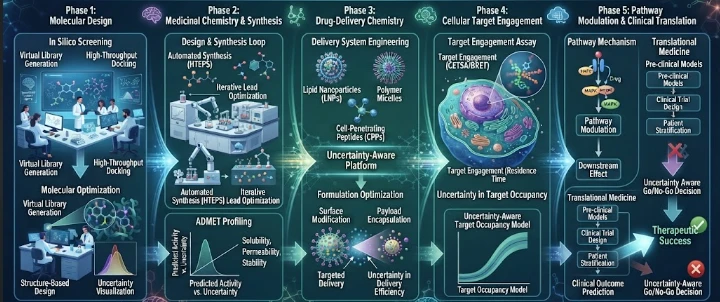
This article describes an uncertainty-aware platform for moving from predicted molecular binding to validated cellular target engagement in medicinal chemistry and drug-delivery research. Docking and machine-learning predictions can rapidly prioritize compounds, but they do not establish that a molecule reaches, occupies, and functionally modulates a target inside relevant cells. The article therefore separates predicted affinity from free intracellular concentration, subcellular localization, t
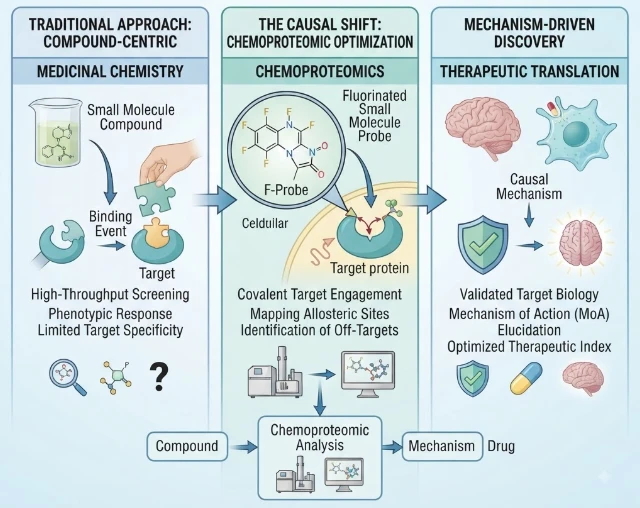
This article explores fluorinated medicinal chemistry through causal chemoproteomics, emphasizing that fluorine substitution can alter far more than potency. A single positional change can modify conformation, pKa, lipophilicity, metabolic stability, target interactions, intracellular exposure, and off-target biology. The article therefore tests whether fluorinated analogues change cellular phenotype through intended target engagement rather than hidden polypharmacology. Matched molecular pairs
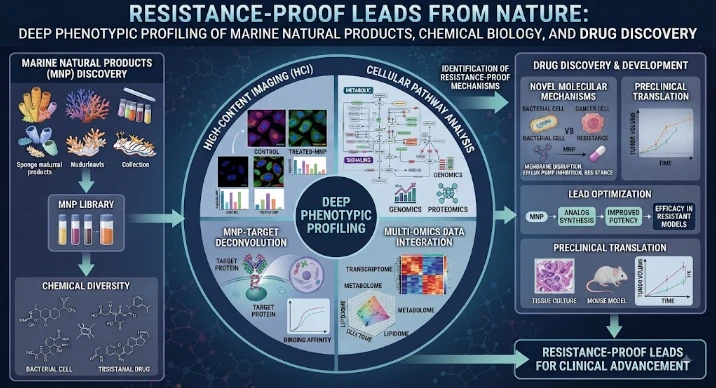
This article presents resistance-aware marine natural-product discovery as a mechanistic process rather than a search for isolated high-potency hits. It explains how activity from marine extracts or fractions can disappear during purification or fail under resistance pressure, making deep phenotypic profiling essential. Morphology, viability kinetics, organelle function, transcriptional state, metabolism, and recovery after washout are combined to connect phenotype with mechanism. The article em