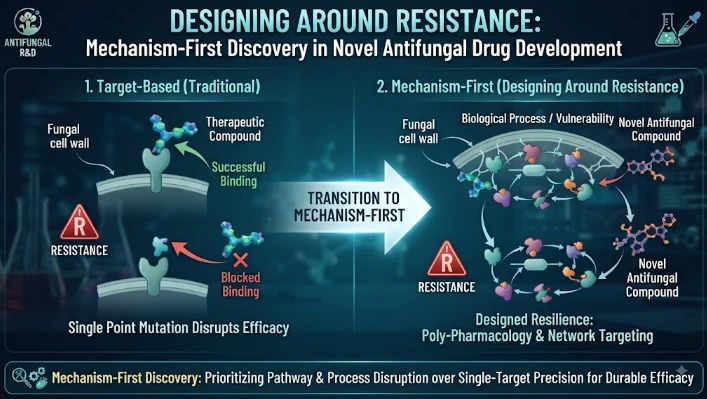
This article treats antifungal resistance as an early design constraint rather than a late clinical problem. It reviews how established classes such as azoles, echinocandins, and polyenes face target mutations, efflux, sterol-pathway changes, and other adaptive mechanisms, and argues that new antifungal discovery should deliberately measure evolutionary escape. The framework begins with target essentiality under infection-relevant conditions, fungal selectivity over human biology, and evolutionary constraint at key target residues. Resistant clinical isolates, saturation mutagenesis, resistant-mutant selection, structural modeling, and whole-genome sequencing are proposed for mapping escape-prone mechanisms. The article also distinguishes genetic resistance from tolerance in biofilms and emphasizes measuring drug penetration and target engagement so poor exposure is not mistaken for target failure. Systems biology can identify bypass pathways, while PK–PD modeling links tissue exposure to resistance prevention. Diagnostics, formulation reliability, fitness costs, environmental resistance reservoirs, stewardship, and mutation-suppression strategies are added to the development picture. The preferred lead is therefore not simply the most potent, but the one with durable activity, exposure, selectivity, and a higher barrier to escape.
Anti-fungal resistance is not some problem far down the road in the process of drug development. Mutations, efflux systems, stress responses, biofilm programs, and genomic plasticity already exist in clinical pathogens, and can reduce treatment efficacy, with treatment itself providing selective pressure for mutations. This is where mechanism-first discovery of antifungals comes in as a new design feature, as evolution is an inherent part of the problem. Potency is still critical but the more important question is if a mechanism has a long-lasting therapeutic window, even as fungi adapt and diversify.
How resistance arises is illustrated with existing classes of drugs. Target mutations, target overexpression and efflux-mediated resistance are issues with azoles as they target ergosterol biosynthesis. Echinocandins block beta-1,3-glucan synthesis and resistance is commonly associated with FKS mutations. Polyenes bind to sterols in the membrane, and rare but clinically significant resistance may be due to changes in the sterol pathways. These mechanisms reflect common themes that can be explored in a planned way by new discovery programs.
Target essentiality under conditions of infection is the first design principle. A gene that is necessary for nutrient growth could be less important for host tissue growth, if alternative nutrients or pathways exist. Genetic screens across stress, temperature, hypoxia, serum and biofilm conditions yield environmental positive drug dependency. Decreased functional resistance is less likely when using a stable essential.
The second is the selective effect of the fungus. Novel targets must be structurally and/or functionally distinct from human biology as to support safe inhibition. Attractive, but not enough, are the fungal-specific enzymes, cell-wall processes or divergent active sites. Structural biology assays, chemical probes, and human off-target assays are more powerful indicators of the likelihood of persistence of selectivity within cells.
Evolutionary constraint is the third principle. Target residues are subject to mutation with ease for some, but are highly conserved for others, as mutation leads to loss of enzyme activity or organism fitness. Escape-prone regions identified by saturation mutagenesis, sequence comparison, selection of resistant mutants and structure modeling. Optimization of compounds supported by contacts to highly mutable residues should be different from that of compounds supported to conserved catalytic features.
Olorofim is a good example of resistance aware development. The compound acts on fungal dihydroorotate dehydrogenase and is a novel mechanism from the major classes of legacy compounds. However, acquired resistance substitutions have been discovered using experimental work with Aspergillus. The lesson is wide-ranging: A new target can help to minimise cross-resistance but not to stop the process of evolution, and thus resistance mapping should be done early in development.
Candida auris upped the ante. In treatment-associated studies, acquisition of echinocandin resistance has been documented to be associated with FKS1 substitutions and acquisition of amphotericin B resistance to sterol-pathway changes. The multidrug resistance can also be found in several regulatory and metabolic pathways, as revealed by the genomic analyses. Discovery programmes should thus be based on panels of genetically diverse and resistant clinical isolates from the start.
The opportunity of collateral sensitivity is interesting. Resistance to one antifungal may lead to sensitivity to another antifungal or perturbation of a pathway. These trade-offs can be mapped and rational combination or sequencing strategies can be developed. Development can take advantage of the costs of adaptations, and can not just be seen as a simple, straight-line rise in fitness.
Combination design is most effectively used when the mechanisms are independent and the resistance routes are mutually exclusive. Two agents that hit the same pathway can still be useful, but when two things in the pathway that are essential are constrained, it is a bit more convincing that there will be a barrier to resistance. Synergy that is only checkerboard isn't enough. Serial passage, mutation-frequency experiments and population sequencing provide more information when it comes to real-world effects of combinations slowing escape.
Biofilms need special attention as they do not necessarily mean that the bacteria are genetically resistant. Tolerance often mimics resistance clinically through a combination of matrix barriers, altered growth rate, metabolic heterogeneity, persister-like states and stress responses. These phenomena are separated by the mechanism-first discovery. A compound that is effective against planktonic cells, but not effective in biofilms will require a different strategy for development than a compound that is defeated by target mutation.
Apparent resistance is also affected by drug penetration. Local exposure is influenced by fungal cell wall, membranes, efflux pumps, tissue lesions and architecture of abscesses. Establishing an intracellular drug dose and target engagement will help differentiate between poor access and altered target sensitivity. This way, medicinal chemists won't have to keep upping the biochemical potency as the real hurdle is getting the compound into the patient's system.
Systems biology contributes to elucidating bypass routes. The pathways that are activated when the primary target is inhibited can be determined by transcriptomics, proteomics, metabolomics and genetic interaction maps. There are responses that are stress markers and those that directly preserve growth. To test this, candidate bypass pathways need to be perturbed to determine if combination treatment results in a more persistent pathway.
The clinical pharmacology must be designed to be compatible with resistance prevention. High levels of concentrations in the blood for a period of time may allow for the selection of subpopulations of bacteria that are partially resistant, while appropriate target coverage may help to reduce partially resistant subpopulations. Pharmacokinetic-pharmacodynamic modeling of dose, tissue exposure, fungal burden and susceptibility. The resistance-aware dosing is hence no longer considered a clinical problem but rather is incorporated into mechanism design.
Diagnostics also have an impact on durability. Because of the speedy identification of species and susceptibility testing, the selection pressure is reduced because of the unnecessary exposure to non-effective drugs. The improved targeted therapy will be a result. When there is a good genotype/phenotype correlation, molecular assays for known resistance mutations are useful for adding speed. Companion surveillance is an added advantage of new antifungals that will be able to identify new escape pathways as they become more widely used.
Indirectly, manufacturing and formulation are important because they can impact exposure level. The risk of subtherapeutic concentrations is increased by poor oral absorption, variable bioavailability, unstable formulations or a difficult dosing schedule. Even with a high genetic barrier, unreliable pharmacokinetics can cause a mechanism's downfall. Developability should thus be a component of resistance planning.
Even though it is necessary to validate these concepts of mutation prevention in fungal systems, these provide a useful frame. The width of the selective window can be estimated by comparing the concentrations of the drug that inhibit susceptible cells with the concentrations that suppress the first step resistant mutants. Compounds that have a low separation between these limits may require a higher level of exposure control. These can relate medicinal chemistry to dosing strategy prior to clinical trials.
There are also fitness costs associated with resistance which need to be measured. A mutation that increases the Minimum Inhibitory Concentration (MIC), but has a large biological cost in terms of reduced growth, virulence or stress tolerance is a greater clinical risk than a resistance mutation with little biological cost. Those costs are quantified in competition experiments, and in infection models. Potentially more durable mechanisms that are linked to costly escape routes would have a more favorable durability profile, especially in the event of treatment providing consistent target coverage.
Resistance planning is difficult with molds due to environmental reservoirs. Azole resistance in Aspergillus can be selected beforehand during agricultural fungicide exposure before clinical treatment and a new patient may already have an organism that is resistant to that agent. Therefore, discovery panels should be provided with isolates from both therapy-associated and environmental resistance routes. In this context, a novel mechanism which gives no cross resistance to agricultural selection offers a significant benefit.
Stewardship is still an integral part of product design. With the widespread empirical use of a valuable new antifungal agent, resistance may develop if diagnostics and prescribing guidance is not in advance. The establishment of spectrum, resistance markers, pharmacodynamic targets and combination options in development programs provides a more robust stewardship package. The chemistry, clinical deployment, and surveillance work synergistically to determine the durability, and this is not a design thing.
Early de-risking of mutagenic or stress inducing chemistry is also useful to resistance-awareness medicinal chemistry. Broadly increasing genomic instability could lead to faster adaptation, but also have safety concerns. It is possible to determine the frequency of mutation, the amount of oxidative stress, and the amount of general cell damage, which can be used to distinguish targeted antifungal pressure from nonspecific injury that can lead to unpredictable evolutionary reactions.
Reliable candidates are switched as a result of designing around resistance. A compound that has a bit less potency, but more selectivity, a wider range of isolates it will cover, will have more tissue exposure and will be more difficult to escape from can be more valuable than the most potent screening hit. Those trade-offs become apparent through Mechanism-First Discovery. Innovation in antifungal development becomes an activity of limiting adaptation rather than being a post hoc response to resistance, while at the same time maintaining human safety.Resistance becomes an early engineering target, rather than a late warning, with novel antifungals.
CITE THIS ARTICLE
Kabir, M. H. (2026). Designing Around Resistance: Mechanism-First Discovery in Novel Antifungal Drug Development. https://researchbykabir.com/article/31519fb0-f7b6-543f-a01d-a0af8092d242
M. H. Kabir, “Designing Around Resistance: Mechanism-First Discovery in Novel Antifungal Drug Development,” 2026. [Online]. Available: https://researchbykabir.com/article/31519fb0-f7b6-543f-a01d-a0af8092d242
Kabir, M. H. (2026) ‘Designing Around Resistance: Mechanism-First Discovery in Novel Antifungal Drug Development’. Available at: https://researchbykabir.com/article/31519fb0-f7b6-543f-a01d-a0af8092d242
Kabir, Md. Humayan. “Designing Around Resistance: Mechanism-First Discovery in Novel Antifungal Drug Development.” 2026, https://researchbykabir.com/article/31519fb0-f7b6-543f-a01d-a0af8092d242.
Md. Humayan Kabir. “Designing Around Resistance: Mechanism-First Discovery in Novel Antifungal Drug Development.” (2026). https://researchbykabir.com/article/31519fb0-f7b6-543f-a01d-a0af8092d242.
Kabir MH. Designing Around Resistance: Mechanism-First Discovery in Novel Antifungal Drug Development. 2026. https://researchbykabir.com/article/31519fb0-f7b6-543f-a01d-a0af8092d242
@misc{article_31519fb0f7b6543fa01da0af8092d242,
  title = {Designing Around Resistance: Mechanism-First Discovery in Novel Antifungal Drug Development},
  author = {Md. Humayan Kabir},
  year = {2026},
  url = {https://researchbykabir.com/article/31519fb0-f7b6-543f-a01d-a0af8092d242},
}
TY  - GEN
AU  - Md. Humayan Kabir
TI  - Designing Around Resistance: Mechanism-First Discovery in Novel Antifungal Drug Development
PY  - 2026-05-10
UR  - https://researchbykabir.com/article/31519fb0-f7b6-543f-a01d-a0af8092d242
ER  -
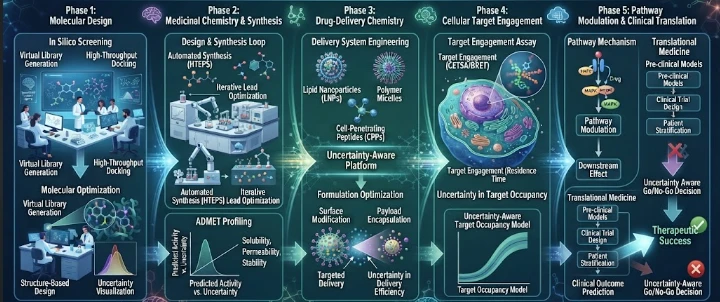
This article describes an uncertainty-aware platform for moving from predicted molecular binding to validated cellular target engagement in medicinal chemistry and drug-delivery research. Docking and machine-learning predictions can rapidly prioritize compounds, but they do not establish that a molecule reaches, occupies, and functionally modulates a target inside relevant cells. The article therefore separates predicted affinity from free intracellular concentration, subcellular localization, t
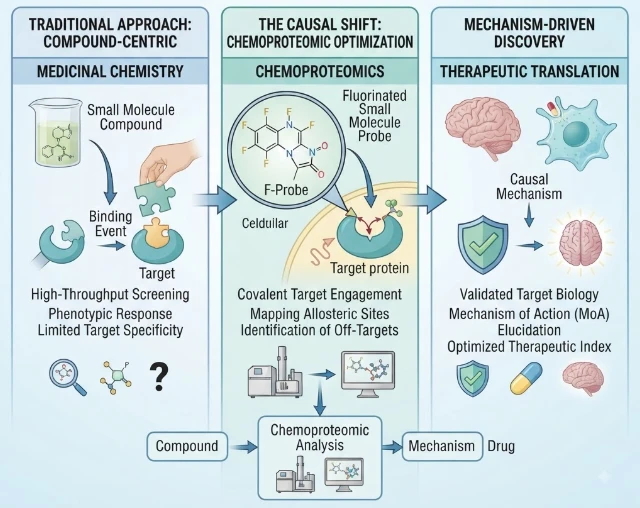
This article explores fluorinated medicinal chemistry through causal chemoproteomics, emphasizing that fluorine substitution can alter far more than potency. A single positional change can modify conformation, pKa, lipophilicity, metabolic stability, target interactions, intracellular exposure, and off-target biology. The article therefore tests whether fluorinated analogues change cellular phenotype through intended target engagement rather than hidden polypharmacology. Matched molecular pairs
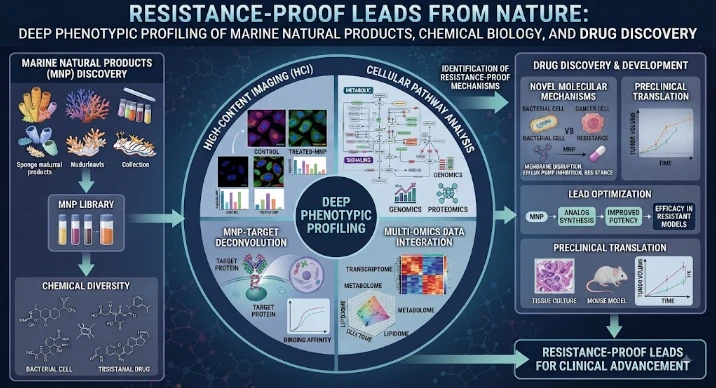
This article presents resistance-aware marine natural-product discovery as a mechanistic process rather than a search for isolated high-potency hits. It explains how activity from marine extracts or fractions can disappear during purification or fail under resistance pressure, making deep phenotypic profiling essential. Morphology, viability kinetics, organelle function, transcriptional state, metabolism, and recovery after washout are combined to connect phenotype with mechanism. The article em