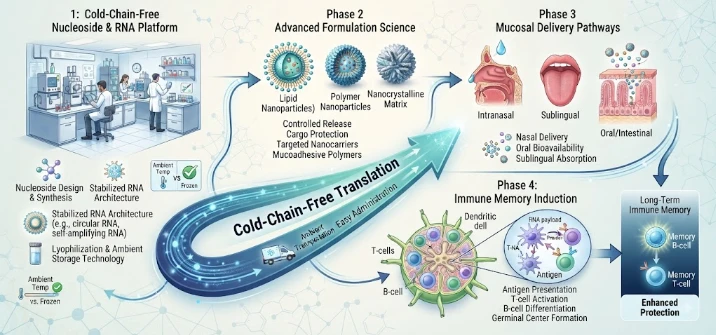
This article explores cold-chain-free translation of nucleoside medicinal chemistry and RNA therapeutics by integrating chemical modification, formulation stability, mucosal delivery, and immune memory. RNA products face degradation through hydrolysis, nucleases, oxidation, aggregation, and environmental stress, making storage and administration central parts of therapeutic design. The article links nucleoside identity, RNA structure, cap and polyadenylation features, excipient composition, particle size, buffer conditions, water activity, drying cycles, mucosal transport, intracellular release, translation, and long-term immunity. RNA integrity testing, particle characterization, mucosal models, innate-sensing assays, translation measurements, neutralization studies, and memory-cell profiling provide mechanistic evidence. Degradation kinetics, formulation design-of-experiments, stability prediction, and transport modeling support uncertainty-aware optimization. The framework also addresses pathogen variation, repeat dosing, mucosal residence, endosomal escape, reactogenicity, complement effects, biodistribution, manufacturing control, and global deployment requirements. The central argument is that a cold-chain-free RNA platform must preserve molecular integrity, delivery efficiency, immune function, and manufacturability together, rather than optimizing any one component in isolation.
Despite the progress in RNA therapeutics, delivery and route, along with storage, are still significant translational challenges. The days of hit finding in the field of nucleoside medicinal chemistry and delivery of RNA therapeutics are behind us as it is known that RNA species can be susceptible to hydrolysis, nucleases, oxidation, aggregation etc. during storage or delivery to the mucosa. The more important question is whether any chemically modified RNA product can be delivered efficiently and be stable under realistic biological and developmental conditions and retain its mucosal properties and immunological function without the need for constant refrigeration. The movement is from ranking to mechanistic program – Exposure, Causality and Reproduction. As the field of RNA therapeutic translation advances, the ability to correlate molecular design with experiments, explaining the actions of a candidate, the reasons for its lack of activity, and the constraints that should be prioritized to design new ones, is growing.
Engineering space for RNA medicines and vaccines is growing as a result of modifications to the nucleosides, optimized sequence design, lipid nanoparticles, lyophilization, cryoprotectant use, and alternative route of administration. A historical and recent development experience reveal that it is uncommon that a good laboratory signal will stay attractive as the biological complexity increases. A helpful research method is then to keep the same activity signal, but to vary the conditions to determine which features are crucial in increasingly realistic scenarios.
Mechanistic depth begins with linking nucleoside modification, RNA structure, formulation stability, mucosal transport, intracellular release, translation and immune memory. It is possible to miss this structure with simple endpoint assays, as similar readouts may occur via different causal pathways. These assays help to separate direct action from downstream adaptation (or nonspecific stress or delivery failure) and can be used to provide a more detailed picture: RNA integrity testing, particle characterization, translation assays, mucosal models, innate-sensing assays, neutralization, and profiling of memory cells. These types of measurements make an appealing answer a testable relationship between chemistry, biological state, and functional outcome.
The design variables must also be considered in a manner that takes into account the interaction between them. Performance is affected by multiple factors which interact, and an optimizing the performance in one dimension can result in a penalty in another.The factors that affect performance include nucleoside identity, cap structure, polyadenylation, the proportion of excipients, particle size, buffer, water activity, and drying cycle, and each of these has an impact on the performance of the others. Optimization strategy is therefore a strategy that must be done practically, which minimizes losses and maximizing gains from the choice of variables. Multi-parameter profiles, particularly in cases where potency, selectivity, stability, tissue exposure and manufacturability all influence the translational value, are of particular value.
Prediction adds some computational leverage when coupled with degradation kinetics, formulation design-of-experiments, transport modeling, stability prediction and multivariate quality analysis, but prediction is of value only when uncertainty is evident. Models that are trained on familiar scaffolds, chemical or biological regions, may not be reliable when presented with novel scaffolds or unusual materials or new patient states for which it wasn't trained. Calibration, prospective testing, domain-of-applicability checks and/or discrepancies between model families provide a mechanism to uncover weak predictions before time-consuming experiments have been performed.
Orthogonal validation is a valuable asset to experimental design. Different types of studies address various facets of the causal question, and minimizing reliance on any single assay technology are accelerated and real-time stability studies, freeze-thaw models, mucosal challenge models, orthogonal potency assays, and memory-response testing. The ability to agree across chemistry, imaging, omics, genetics, and functional biology, makes the argument for mechanism more powerful than repeated measurements of the same endpoint. Conflict is also informative, as it can be used to uncover unknown exposure thresholds, assay artifacts, compensatory pathways, and/or context-specific pharmacology.
Another challenge is the biological diversity. Target abundance, barrier properties, immune tone, metabolism, prior immunity, and administration technique can be altered without changing the nominal treatment, with a change in temperature, humidity, mucosal thickness, etc. or change in innate immune tone. This leads to a risk of average responses obscuring a variety of exposure-response relationships within a population of subgroups. Biological variation becomes the part of design, and not the end explanation for incompleteness of results, as it is in the case of stratified analysis, representative model panels, and explicit covariate testing.
While RNA expression is technically successful, resistance and adaptation should be addressed early on due to the possibility of pathogen evolution and declining immunity. Variant panels, neutralization breadth, mucosal challenge, memory B-cell analysis, T-cell profiling and repeat dose studies show activity is evolutionary or compensatory. If the candidate is not as potent as it once was, but is still able to cross the common ways of escape, it can be of greater value than a weak, high-potency lead. Resistance-aware development also helps to focus mechanism because recurrent escape changes often reveal the protein, pathway, or process of exposure that is most likely to be causing the escape.
Adopt molecular promises to the reachable biology through delivery and pharmacokinetics. The delivery of the active form to the target tissue at the right concentration and for the right amount of time depends on the mucosal residence, epithelial uptake, endosomal escape, persistence of the RNA in the cell, antigen expression, and distribution to the systemic circulation. This relationship cannot be fully represented with just nominal dose alone as it is modified by the factors of absorption, distribution, binding, transformation, clearance, and local barriers. Mechanistic exposure measurements should thus be included in the first developmental cycles along with efficacy data.
Mechanism and safety assessment go hand in hand to make it more informative. Target-linked pharmacology/activity can be differentiated from broad tissue injury, immune activation, formation-induced toxicities, and reactive chemistry by the following observations: Innate cytokine activation, local reactogenicity, complement effects, off-target biodistribution, tissue histology, and repeat-dose tolerance. Comparative disease relevant and healthy testing determines therapeutic activity vs. side effects.
Manufacturing is not just a downstream logistical issue, rather it is a scientific variable. Even if the nominal composition of the product does not seem to have changed, they can change the quality, biological activity and exposure of the product during various processes of RNA synthesis, purification, preparation of lipid raw materials, mixing of nanoparticles, moisture control and packaging. Quality-by-design thinking involves correlation of key material characteristics and process parameters with measurable performance beyond specification testing at the end of the process. Laboratory success means more credibility to scalability when the raw material varies, the size of the equipment increases, storage and transport increases, and production runs are independent.
There also need to be realistic models of clinical use for translation. Treatment timing, dose frequency, route, diagnostic needs, and acceptable treatment complexity are determined by the delivery of the treatment, namely needle-free delivery, mass vaccination, remote distribution, dosing simplicity, and storage infrastructure, as well as booster strategy. A platform that is technically sound may not be useful if it requires an excessive amount of administration, storage space or monitoring to keep up, or would be too expensive for use in the setting where treatment is needed. So combining mechanistic excellence with deployment feasibility is an advantage to development decisions, in the first place, before it's too late to turn back.
These layers are bridged by data integration. The quality of RNA can be grouped with the attributes of the particles, stability curves, transport across mucous membranes, expression of the antigen, immune response, and outcome of the challenge rather than as individual pieces of assay data. Iterative learning is reproducible via traceable metadata, versioned models, standardized controls and prospective decision rules. This leads to a developmental record that describes what was believed to be the winning candidate, what was known about it and what was not.
Cold-chain free programs require potency retention, RNA integrity, particle-size stability, residual moisture, mucosal delivery efficiency, neutralization breadth, memory persistence and excursion tolerance. Success criteria include durability, reproducibility, exposure margin, biological breadth, and manufacturing robustness, in addition to the traditional potency, and improve decision quality. These statistics help to discourage optimization for a particular assay and encourage candidates to be credible in separate assays. It's also clear from a transparent scorecard why a less spectacular outcome may actually be the best development decision.
Failure too is a positive element of a strong program. Failure of RNA fragmentation, lipid oxidation, aggregation, inadequate endosomal escape, over-strong innate responses, and inadequate dried product stability are all negative results that help identify the boundaries of the mechanism and limit the need for re-investment in weak hypotheses. Failure to synthesize, inability to attack an enemy, lack of exposure, resistance development or loss of effect in a specific group of models provides a more realistic perspective on the search space for future models. It's easier to discover when failures teach at least as much as successes.
Engineering cold-chain free RNA translation requires chemistry, formulation, mucosal delivery and immune durability to be engineered as a system. The key benefit of the central advantage is that it is a complete set of explanations, rather than just performance claims, that connect together to cover the four central areas of mechanism, exposure, biological diversity, safety, and production. That structure will facilitate better selection of the candidates as there is a test for every major development claim. Progress instead is much more related to a logical sequence of results which are not necessarily spectacular experiments, but are convincing as complexity progresses from lab-based systems to real clinical situations.
CITE THIS ARTICLE
Kabir, M. H. (2026). Cold-Chain-Free Translation of Nucleoside Medicinal Chemistry, RNA Therapeutics and Drug-Development Platforms: Integrating Formulation, Mucosal Delivery, and Immune Memory. https://researchbykabir.com/article/19108c34-4e60-5d05-a195-64c0151cf805
M. H. Kabir, “Cold-Chain-Free Translation of Nucleoside Medicinal Chemistry, RNA Therapeutics and Drug-Development Platforms: Integrating Formulation, Mucosal Delivery, and Immune Memory,” 2026. [Online]. Available: https://researchbykabir.com/article/19108c34-4e60-5d05-a195-64c0151cf805
Kabir, M. H. (2026) ‘Cold-Chain-Free Translation of Nucleoside Medicinal Chemistry, RNA Therapeutics and Drug-Development Platforms: Integrating Formulation, Mucosal Delivery, and Immune Memory’. Available at: https://researchbykabir.com/article/19108c34-4e60-5d05-a195-64c0151cf805
Kabir, Md. Humayan. “Cold-Chain-Free Translation of Nucleoside Medicinal Chemistry, RNA Therapeutics and Drug-Development Platforms: Integrating Formulation, Mucosal Delivery, and Immune Memory.” 2026, https://researchbykabir.com/article/19108c34-4e60-5d05-a195-64c0151cf805.
Md. Humayan Kabir. “Cold-Chain-Free Translation of Nucleoside Medicinal Chemistry, RNA Therapeutics and Drug-Development Platforms: Integrating Formulation, Mucosal Delivery, and Immune Memory.” (2026). https://researchbykabir.com/article/19108c34-4e60-5d05-a195-64c0151cf805.
Kabir MH. Cold-Chain-Free Translation of Nucleoside Medicinal Chemistry, RNA Therapeutics and Drug-Development Platforms: Integrating Formulation, Mucosal Delivery, and Immune Memory. 2026. https://researchbykabir.com/article/19108c34-4e60-5d05-a195-64c0151cf805
@misc{article_19108c344e605d05a19564c0151cf805,
  title = {Cold-Chain-Free Translation of Nucleoside Medicinal Chemistry, RNA Therapeutics and Drug-Development Platforms: Integrating Formulation, Mucosal Delivery, and Immune Memory},
  author = {Md. Humayan Kabir},
  year = {2026},
  url = {https://researchbykabir.com/article/19108c34-4e60-5d05-a195-64c0151cf805},
}
TY  - GEN
AU  - Md. Humayan Kabir
TI  - Cold-Chain-Free Translation of Nucleoside Medicinal Chemistry, RNA Therapeutics and Drug-Development Platforms: Integrating Formulation, Mucosal Delivery, and Immune Memory
PY  - 2026-02-08
UR  - https://researchbykabir.com/article/19108c34-4e60-5d05-a195-64c0151cf805
ER  -
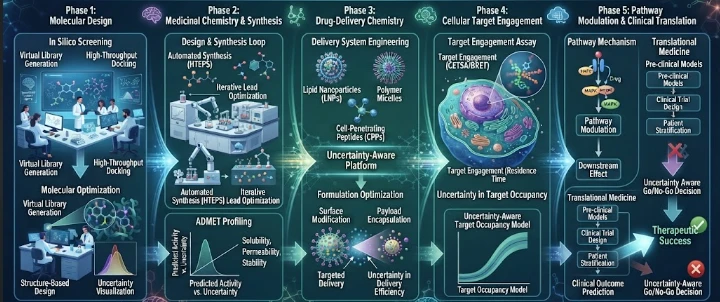
This article describes an uncertainty-aware platform for moving from predicted molecular binding to validated cellular target engagement in medicinal chemistry and drug-delivery research. Docking and machine-learning predictions can rapidly prioritize compounds, but they do not establish that a molecule reaches, occupies, and functionally modulates a target inside relevant cells. The article therefore separates predicted affinity from free intracellular concentration, subcellular localization, t
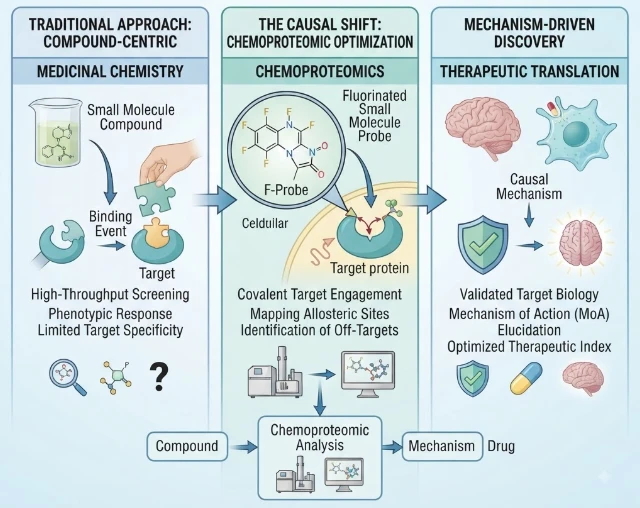
This article explores fluorinated medicinal chemistry through causal chemoproteomics, emphasizing that fluorine substitution can alter far more than potency. A single positional change can modify conformation, pKa, lipophilicity, metabolic stability, target interactions, intracellular exposure, and off-target biology. The article therefore tests whether fluorinated analogues change cellular phenotype through intended target engagement rather than hidden polypharmacology. Matched molecular pairs
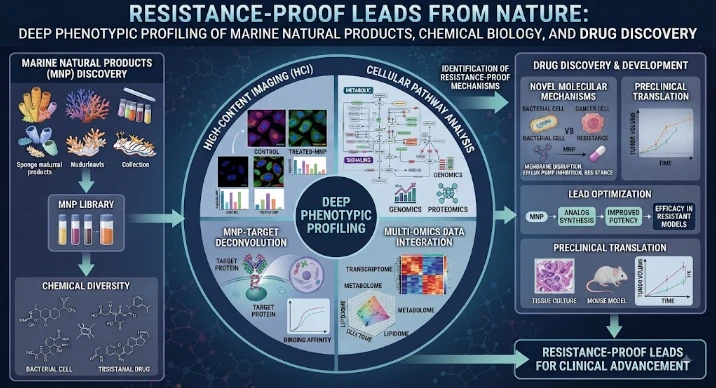
This article presents resistance-aware marine natural-product discovery as a mechanistic process rather than a search for isolated high-potency hits. It explains how activity from marine extracts or fractions can disappear during purification or fail under resistance pressure, making deep phenotypic profiling essential. Morphology, viability kinetics, organelle function, transcriptional state, metabolism, and recovery after washout are combined to connect phenotype with mechanism. The article em